Why Lightweight Safety Shoes Are the Future of Worker Protection
For decades, the word “safety shoes” meant one thing to most workers — heavy, stiff, uncomfortable boots that you wore because you had to, not because you wanted to. That era is firmly behind us.
Today, lightweight safety shoes are one of the fastest-growing segments in the global PPE market. Industry data shows that lightweight designs now influence over 42% of safety footwear purchasing decisions globally, and the shift toward ergonomic, light-yet-protective footwear is reshaping how industries think about worker safety, productivity, and compliance.
The reason is simple: a worker who is comfortable works better, stays safer, and is far more likely to actually wear their PPE every single day. Lightweight safety shoes solve the single biggest barrier to footwear compliance — discomfort.
If you are looking for lightweight safety shoes in India for yourself, your team, or your organisation, this guide covers everything you need to know — from materials and types to certifications, industries, and where to buy genuine certified options.
What Makes a Safety Shoe “Lightweight”?
A traditional steel-toe safety shoe can weigh anywhere between 700 grams to over 1 kilogram per shoe. Over an 8–12 hour shift, that is an enormous load on your feet, ankles, knees, and lower back.
Lightweight safety shoes typically weigh between 350 to 550 grams per shoe — sometimes even less — without compromising on the core safety features that certification standards demand. This reduction in weight is achieved through:
Advanced Toe Cap Materials Instead of traditional steel, lightweight shoes use composite toe caps made from carbon fibre, Kevlar, fibreglass, or high-performance thermoplastic materials. These composites match steel’s impact and compression resistance ratings while being 30–50% lighter and completely non-metallic.
High-Performance Midsoles EVA (Ethylene Vinyl Acetate) and PU (Polyurethane) foam midsoles replace heavier rubber compounds. These materials offer superior cushioning, shock absorption, and energy return while keeping the shoe weight minimal.
Mesh and Synthetic Uppers Modern lightweight safety shoes use breathable mesh panels, synthetic leather, and microfibre uppers instead of full-grain leather. This dramatically cuts weight while improving ventilation — a major advantage for workers in hot environments.
Lightweight Outsoles Rubber-PU blend or pure PU outsoles provide the grip, oil resistance, and durability of traditional rubber at a fraction of the weight.
Key Benefits of Lightweight Safety Shoes
1. Reduced Foot Fatigue
This is the primary reason workers and employers alike are making the switch. Lighter shoes mean less energy expended with every step. Workers who stand or walk for 8–12 hours report significantly less foot, leg, and back pain when wearing lightweight safety footwear compared to traditional heavy boots.
2. Better Compliance
When safety shoes are comfortable, workers actually wear them — all day, every day. Heavy, painful footwear gets removed the moment a supervisor looks away. Lightweight shoes stay on, which means workers stay protected.
3. Increased Productivity
Physical comfort directly translates to better focus, less fatigue-induced error, and higher output. Studies across manufacturing and logistics environments consistently show improved worker performance when ergonomic footwear is introduced.
4. Suitable for Long Shifts
Workers in sectors like logistics, food processing, healthcare, and hospitality are on their feet for extremely long durations. Lightweight safety shoes with cushioned insoles and breathable uppers make these shifts significantly more manageable.
5. Metal-Free Design (Where Required)
Composite toe lightweight safety shoes are completely metal-free, making them ideal for airport ground staff, security environments, electronics manufacturing, and MRI facilities where metal detectors or electromagnetic sensitivity is a concern.
6. Better for Warmer Climates
India’s climate makes ventilation in footwear critical. Lightweight safety shoes with breathable mesh panels and moisture-wicking linings keep feet cooler and drier, reducing the risk of skin infections and improving overall comfort through long summer shifts.
Types of Lightweight Safety Shoes
Composite Toe Lightweight Safety Shoes
The gold standard in lightweight protective footwear. Composite toe caps provide the same S1/S2/S3 level protection as steel toe shoes while being significantly lighter and fully non-metallic. These are the most popular choice for workers in aviation, electronics, logistics, and light manufacturing.
Lightweight Sports-Style Safety Shoes
Designed to look and feel like athletic shoes while meeting full safety standards. These are growing rapidly in popularity among younger workers and in workplaces that want to move away from the “traditional boot” aesthetic. They typically feature mesh uppers, cushioned athletic soles, and composite toe caps.
Lightweight Low-Ankle Safety Shoes (Oxford Style)
A sleek, low-profile safety shoe ideal for office-adjacent industrial environments, supervisory roles, laboratories, and food processing facilities. Light, smart-looking, and fully certified.
Lightweight Mid-Ankle Safety Shoes
Offers ankle support without the full height and weight of a boot. Ideal for construction supervisors, warehouse managers, and workers who need some ankle stability but not a full boot.
Lightweight ESD / Anti-Static Safety Shoes
Extremely light, specialised footwear for electronics manufacturing, semiconductor facilities, and pharmaceutical production where electrostatic discharge must be controlled. Usually built with lightweight composite toes, ESD-dissipating soles, and minimalist construction.
Lightweight Slip-On Safety Shoes
Without laces or straps, these are the lightest and most convenient option for workers who need to put on and remove their footwear frequently — common in food processing, healthcare, and hospitality environments.
Materials Used in Lightweight Safety Shoes
Understanding the materials helps you choose the right shoe for your specific environment:
Carbon Fibre Toe Cap — The lightest protective toe cap available. Extremely strong, non-metallic, and thermally non-conductive. Used in premium lightweight safety shoes.
Kevlar Midsole / Insole — Provides puncture resistance (anti-nail penetration) without adding significant weight. Standard in S3-rated lightweight shoes.
EVA Midsole — Ultra-light foam that absorbs shock and provides cushioning. Very common in sports-style safety shoes.
PU (Polyurethane) Outsole — Lightweight, oil-resistant, flexible, and durable. PU outsoles are the most common choice for lightweight safety footwear.
Microfibre Upper — A synthetic leather alternative that is lighter, more breathable, and easier to clean than full-grain leather. Very popular in Indian industrial environments.
Mesh Panel Upper — Maximum breathability, minimum weight. Used in the vamp (front) of sports-style safety shoes to improve ventilation.
TPU (Thermoplastic Polyurethane) Toe Cap — A newer, very light alternative to steel and composite toe caps. Meets EN ISO 20345 standards and is growing in popularity for light-duty applications.
Certifications to Look for in Lightweight Safety Shoes
Lightweight does not mean unprotected. Always verify that your lightweight safety shoes carry the appropriate certifications:
IS 15298 (BIS / ISI Mark) — The Indian Bureau of Standards certification. Mandatory for safety footwear sold in India. Covers impact resistance (200 joules), compression resistance, and other parameters. Look for the ISI mark on the shoe and verify the licence number at bis.gov.in.
EN ISO 20345:2022 — European standard defining safety classes:
- SB – Basic: toe cap protection (200J impact, 15kN compression)
- S1 – SB + antistatic, energy absorption in heel, closed heel
- S2 – S1 + water penetration and absorption resistance
- S3 – S2 + midsole penetration resistance (anti-nail)
Most quality lightweight safety shoes in India are rated S1 or S3. For construction and outdoor environments, always choose S3.
ASTM F2413 — American standard. Required if your products are destined for the US market.
IS 15734 — Indian standard for anti-static properties. Required in electronics and semiconductor facilities.
Which Industries Benefit Most from Lightweight Safety Shoes?
Lightweight safety shoes are not just for one industry — they are suitable across a wide range of environments where worker comfort and mobility are priorities:
Logistics and Warehousing — Workers walk an average of 15–20 km per shift. Lightweight shoes reduce fatigue dramatically and improve speed and agility in picking and packing operations.
Food Processing and Packaging — Clean, lightweight, slip-resistant safety shoes with composite toes are ideal. Many facilities also require white or light-coloured shoes for hygiene compliance.
Manufacturing and Assembly — Light-duty assembly line work benefits from lightweight shoes that allow agility and reduce end-of-shift fatigue.
Automotive — Assembly workers in automotive plants often spend hours standing on hard concrete. Lightweight cushioned safety shoes with anti-static properties are a standard requirement.
Aviation and Airports — Metal-free composite toe lightweight shoes are mandatory for airside personnel.
Hospitals, Laboratories, and Pathology — Anti-static, slip-resistant lightweight shoes that meet hygiene standards. Lightweight designs are preferred for healthcare workers who are on their feet all day.
Retail and Commercial Environments — Security staff, supervisors, and commercial workers who need footwear that looks professional but meets safety standards benefit from lightweight Oxford-style safety shoes.
Schools, Colleges, and Institutions — Lightweight PT shoes and institutional footwear for uniformed organisations where comfort during extended physical activity is a priority.
IT Parks and Tech Campuses — Many large tech employers now mandate safety footwear in their facilities. Lightweight, sneaker-style safety shoes bridge the gap between safety compliance and workplace culture.
How to Choose the Right Lightweight Safety Shoes
With so many options available, here is a practical checklist for selecting the right pair:
Step 1 — Identify the Hazards What are the actual risks in your work environment? Falling objects require toe cap protection. Sharp surfaces require anti-puncture midsoles (S3). Electrical environments require anti-static or ESD properties. Wet/oily floors require slip-resistant outsoles. Match the shoe to the hazard — not just the weight.
Step 2 — Check the Safety Rating For most Indian industrial environments, S1 is the minimum. For construction, mining, and outdoor work, S3 is recommended. Verify the IS 15298 marking.
Step 3 — Confirm the Toe Cap Material For environments with metal detectors or electrical hazards, choose composite toe over steel toe. For maximum weight reduction at a given protection level, carbon fibre toe caps are the lightest option.
Step 4 — Consider the Upper Material Hot, humid environments → mesh and microfibre uppers with moisture-wicking lining. Chemical exposure environments → full leather or chemical-resistant synthetic uppers. Abrasive environments → reinforced leather or double-stitched microfibre.
Step 5 — Choose the Right Sole Oily floors → oil-resistant PU or nitrile rubber sole. Outdoor and uneven surfaces → deeper tread PU outsole. Clean indoor environments → flat or shallow-tread anti-static sole.
Step 6 — Get the Right Fit Safety shoes should be tried on at the end of the day when feet are slightly swollen. There should be roughly a thumb’s width of space at the front of the toe cap. A poor fit negates all the weight savings — an ill-fitting light shoe is no better than a heavy boot if it causes blisters or affects posture.
Top Brands for Lightweight Safety Shoes in India
India’s market has matured significantly, and several leading brands now offer excellent lightweight options. Trusted names available through authorised dealers include:
Safety Jogger — Known internationally for athletic-style safety shoes that are among the lightest certified footwear available in India. Their composite toe and S3-rated shoes are popular in logistics and manufacturing.
Allen Cooper — One of India’s most recognised safety footwear brands. Their lightweight range includes sports-style and executive safety shoes with composite toe options.
Karam — A major Indian PPE brand with a growing lightweight footwear line suited for construction and industrial applications.
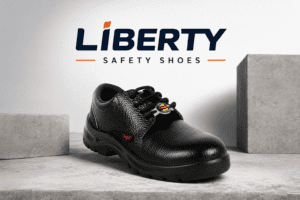
Liberty Safety — India’s largest footwear manufacturer offers a range of lightweight industrial safety shoes at competitive price points.
Mallcom — Popular for workwear and safety footwear; their lightweight range is widely used in manufacturing and utilities.
Venus — Known for affordable lightweight safety footwear for institutions and light industrial use.
Magnum — Combat-heritage brand that now offers lightweight tactical and safety footwear used by defence, police, and industrial clients.
These and many more brands are available through authorised dealers and safety equipment suppliers across India.
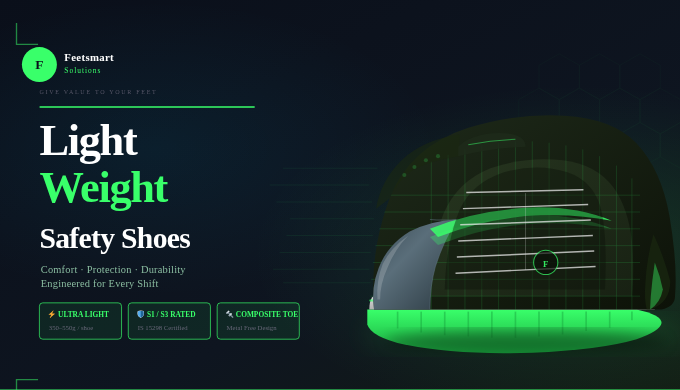
Feetsmart Solutions: Your Source for Lightweight Safety Shoes in India
Based in Karnal, Haryana, Feetsmart Solutions is a leading dealer and supplier of lightweight safety shoes and complete PPE equipment serving clients across India.
Their product range covers all categories of lightweight safety footwear — from sports-style composite toe shoes and lightweight low-ankle oxford safety shoes to institutional PT shoes and lightweight jungle shoes with PU soles. They stock leading brands including Safety Joggers, Allen Cooper, Liberty, Karam, Mallcom, Venus, Magnum, and many more — all genuine, certified products.
Whether you are procuring lightweight safety shoes for a team of 5 or a workforce of 5,000, Feetsmart Solutions has the product range, institutional supply experience, and after-sales support to make your procurement seamless.
To explore the full range of lightweight safety shoes and request a quote, visit: www.feetsmart.i
Lightweight Safety Shoes vs. Heavy Safety Shoes: Which Should You Choose?
This is not a one-size-fits-all answer. Here is a straightforward comparison to guide your decision:
Choose Lightweight Safety Shoes when:
- Workers are on their feet for 8+ hours
- The environment is indoors or semi-indoors (warehouses, factories, labs, food plants)
- Mobility, agility, and speed matter (logistics, assembly lines)
- Metal-free footwear is required (aviation, electronics, hospitals)
- Worker buy-in and daily compliance are a challenge
- The climate is hot and humid
Choose Traditional Heavy Safety Boots when:
- Work involves extreme terrain (construction sites, quarries, mines)
- Ankle support and protection against heavy falling debris is critical
- Chemical immersion or standing water is a constant hazard
- The work environment involves sharp, heavy, or abrasive materials at ground level
For many workplaces, the answer is a combination — lightweight safety shoes for day-to-day indoor operations and heavy boots for specific high-risk tasks or field work.
Caring for Your Lightweight Safety Shoes
Lightweight safety shoes last longer and perform better with basic maintenance:
- Clean uppers with a damp cloth after each shift. Avoid soaking mesh uppers.
- Allow shoes to dry naturally at room temperature — never near a direct heat source, as this can degrade composite toe caps and PU soles.
- Replace insoles every 6 months if shoes are worn daily — worn insoles negate much of the cushioning benefit.
- Inspect the outsole regularly for excessive wear, especially in the heel area. Replace shoes when sole depth falls below safety levels.
- Do not use harsh chemical solvents to clean microfibre or mesh uppers — mild soap and water is sufficient.
- Store in a cool, dry place away from direct sunlight when not in use.
A typical pair of quality lightweight safety shoes, with proper care, lasts 12–18 months under daily use.
Q: Are lightweight safety shoes as protective as heavy steel toe shoes? Yes — when certified to the same standard (IS 15298 / EN ISO 20345 S3), a lightweight composite toe safety shoe provides equivalent impact and compression protection to a steel toe shoe. The weight difference is in the material, not the protection level.
Q: Can lightweight safety shoes be used in construction? Yes, provided they carry an S3 rating (puncture-resistant midsole) and comply with IS 15298. Many lightweight S3 shoes are now specifically designed for construction use. For very heavy-duty construction involving falling heavy objects or rough terrain, a mid-ankle or ankle boot with lightweight construction may be more appropriate than a low-cut shoe.
Q: What is the weight of a typical lightweight safety shoe? Quality lightweight safety shoes typically weigh between 350–550 grams per shoe (700g–1.1kg per pair), compared to 700g–1kg+ per shoe for traditional steel toe boots.
Q: Are composite toe shoes more expensive than steel toe? Generally yes — composite toe materials like carbon fibre cost more to produce than steel. However, the price gap has narrowed significantly and many mid-range composite toe shoes are available in India at very competitive prices. The long-term productivity and health benefits more than justify the small additional cost.
Q: Do lightweight safety shoes pass metal detectors? Yes — composite toe lightweight safety shoes are 100% metal-free and will pass standard metal detectors without triggering an alert. Always confirm with your supplier that the specific model has no metal components, including eyelets and shanks.
Q: Where can I buy genuine lightweight safety shoes in India? Always buy from authorised dealers who can provide certification documentation and genuine brand products. For a wide range of certified lightweight safety shoes from top brands, visit www.feetsmart.in.
The shift to lightweight safety shoes is not a compromise — it is an upgrade. Modern composite materials, advanced foam technology, and ergonomic design have made it possible to build footwear that is genuinely lighter than a regular sports shoe while meeting the most demanding international safety standards.
For workers in India’s growing industrial, logistics, food processing, healthcare, and institutional sectors, lightweight safety shoes represent the ideal balance of protection, compliance, and all-day comfort. They are not just easier to wear — they actively protect worker health by reducing fatigue, improving posture, and encouraging the daily habit of wearing proper PPE.
Choose certified. Choose comfortable. Choose footwear that your team will actually want to wear.