
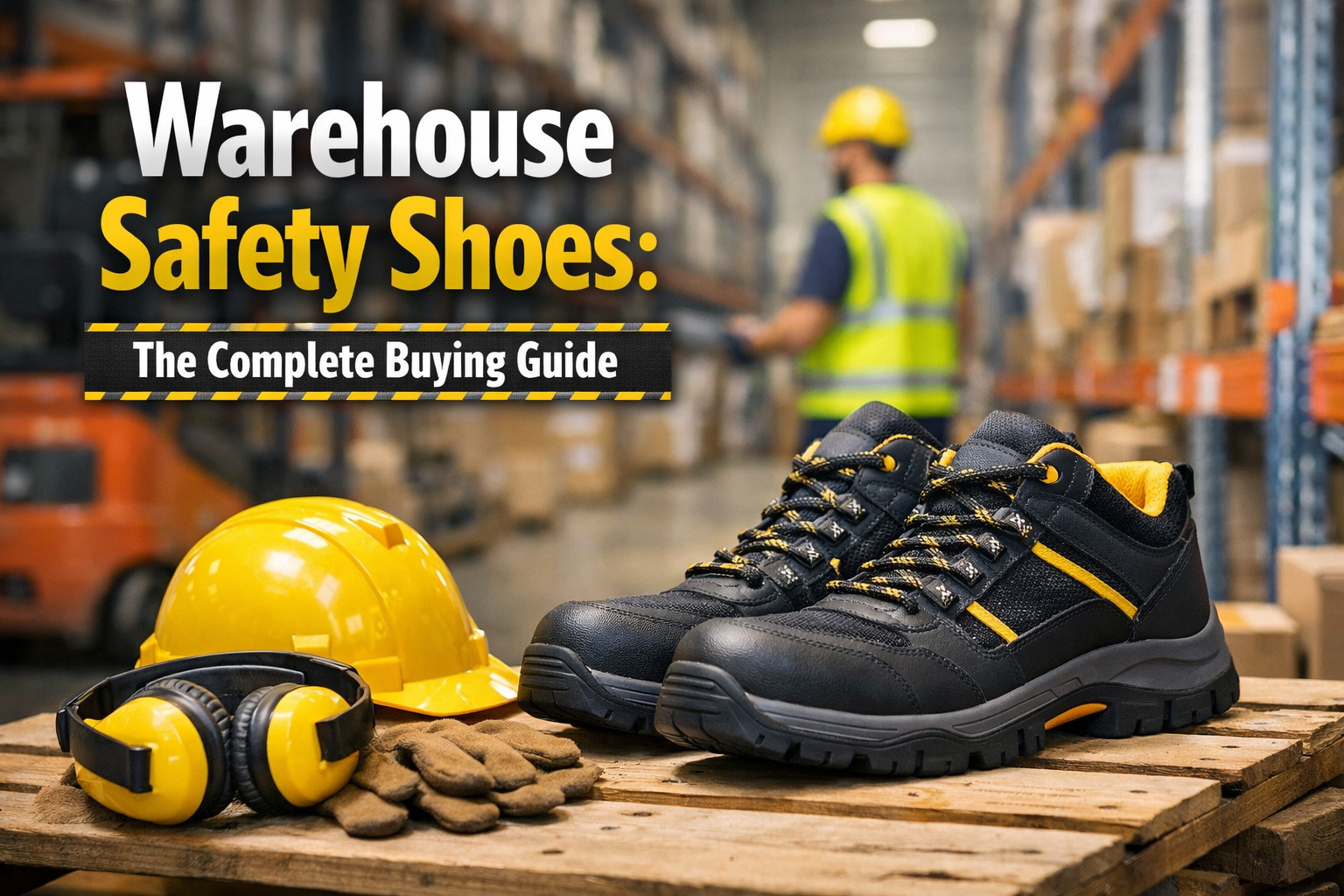
When it comes to workplace safety, footwear is often the last thing people think about — but in a warehouse, it should be the first. Warehouse workers face serious hazards every single day: heavy falling objects, sharp debris on the floor, slippery surfaces, and hours of standing on hard concrete. The right pair of warehouse safety shoes can prevent life-altering injuries and keep you comfortable through even the longest shifts.
Whether you are an employer building a PPE policy or a worker shopping for your next pair, this guide covers everything you need to know about warehouse safety shoes — from essential features and types to international standards and buying tips.
Why Warehouse Safety Shoes Are Essential
A standard warehouse environment is full of hazards that ordinary footwear simply cannot handle. Forklifts and pallet jacks can roll over feet. Heavy boxes and machinery parts can fall from shelves. Wet floors near loading bays or cold storage areas create constant slip risks. In facilities that handle electronics or flammable materials, even a static discharge from your feet can trigger a serious incident.
Beyond injury prevention, proper safety footwear also reduces long-term health problems. Workers who spend 8 to 10 hours a day on hard floors without adequate cushioning often develop chronic foot pain, knee problems, and lower back strain. Investing in quality warehouse safety shoes protects not just your feet, but your entire body.
Key Features to Look For
Not all safety shoes are created equal. When choosing warehouse safety shoes, these are the features that matter most:
Steel or Composite Toe Cap — This is the most fundamental feature. A steel toe cap protects against crushing impacts from falling or rolling objects. Composite toe caps made from carbon fiber or Kevlar meet the same safety standards, are lighter, and work better in cold environments or workplaces with metal detectors.
Puncture-Resistant Midsole — A steel or Kevlar midsole prevents sharp objects like nails, screws, or metal shards from piercing through the bottom of the shoe and into your foot.
Slip-Resistant Outsole — Deep-tread rubber outsoles provide traction on wet, oily, or uneven warehouse floors. Look for shoes rated SRC, which is the highest slip resistance rating under European standards.
ESD or Anti-Static Protection — Electrostatic discharge (ESD) footwear safely dissipates static buildup from your body. This is essential in warehouses handling electronics, chemicals, or near charging stations and electrical equipment.
Cushioned Insole and Arch Support — Memory foam, gel, or orthopedic insoles reduce fatigue and joint stress during long shifts. Many safety shoes allow you to remove the factory insole and insert custom orthotics.
Water and Oil Resistance — A water-resistant or waterproof upper keeps feet dry in cold storage warehouses, outdoor loading areas, or anywhere liquids are present on the floor.
Breathability — Mesh panels or moisture-wicking linings prevent excessive sweating, which reduces the risk of blisters and fungal infections during long working hours.
Ankle Support — High-cut boots or padded ankle collars provide stability on uneven surfaces and significantly reduce the risk of ankle sprains.
Types of Warehouse Safety Shoes
Safety Boots (High-Cut) — These offer full ankle coverage and are ideal for workers in heavy-duty areas like loading docks, cold storage, or outdoor yards. They offer the highest level of protection against falling objects and ankle twists.
Safety Shoes (Low-Cut) — Lighter and more agile than boots, low-cut safety shoes are popular with order pickers, packing staff, and anyone who needs to move quickly over long distances throughout their shift.
Safety Trainers / Athletic Safety Shoes — These look and feel like modern sneakers but include hidden safety features such as a composite toe cap and slip-resistant sole. They are increasingly popular because they are comfortable and do not look like traditional industrial footwear.
Metatarsal Guard Shoes — In addition to protecting the toes, these shoes have a guard over the top of the foot to protect the metatarsal bones. They are recommended in environments where heavy objects are regularly handled or dropped from height.
Electrical Hazard (EH) Footwear — Insulated to protect against accidental electrical contact. Required in warehouses with live electrical equipment, high-voltage machinery, or battery charging areas.
International Safety Standards Explained
When buying warehouse safety shoes, always check for certification. The most important standards are:
EN ISO 20345 is the European and internationally recognized standard. Shoes are classified from S1 to S5. S1 includes a steel toe cap and antistatic properties. S2 adds water resistance to the upper. S3 — the most common choice for warehouses — adds a puncture-resistant midsole and cleated outsole. S4 and S5 apply to rubber or polymer boots.
ASTM F2413 is the American standard covering impact protection, compression resistance, puncture resistance, and metatarsal protection. Look for the ASTM label inside the shoe.
IS 15844 is the Bureau of Indian Standards (BIS) certification for industrial safety footwear, covering similar protection criteria relevant to the Indian market.
Always buy from reputable suppliers and verify the certification stamp inside the shoe. Counterfeit safety shoes may look identical to certified ones but offer zero real protection in an accident.
How to Choose the Right Pair
Start by identifying the specific hazards at your workplace. A worker in a dry goods warehouse has different needs than someone working in a cold storage facility or near electrical equipment. Once you know your hazards, check your employer’s PPE requirements — many companies specify a minimum safety rating such as S3.
Fit is just as important as safety rating. Always try safety shoes on at the end of the day when your feet are naturally at their largest. There should be about a thumb’s width of space at the toe, no heel slippage, and enough width to wiggle your toes comfortably. A poorly fitting safety shoe causes blisters and fatigue that can make you less safe on the job.
Plan to replace your safety shoes every 12 to 18 months with daily use, or sooner if you notice worn outsoles, cracked uppers, or a damaged toe cap area. The safety features of a shoe degrade over time even if the exterior still looks intact.
Frequently Asked Questions
What is the difference between S1, S2, and S3 safety shoes?
S1 includes a steel toe cap and antistatic protection. S2 adds water resistance to the upper. S3 further adds a puncture-resistant midsole and cleated outsole, making it the most suitable option for most warehouse environments.
Are composite toe shoes as safe as steel toe?
Yes. When certified to the same standard, composite toe caps provide equivalent impact and compression protection. They are lighter, non-metallic, and better suited for cold environments or workplaces with security screening.
How often should I replace my warehouse safety shoes?
Every 12 to 18 months with regular daily use. Inspect them frequently for worn soles, cracked uppers, or any deformation around the toe cap area.
Can I use custom orthotics in safety shoes?
Yes. Most warehouse safety shoes come with removable insoles specifically to accommodate custom orthotics. Look for models with deep heel cups and a wide toe box for the best compatibility.
Choosing the right warehouse safety shoes is one of the most important decisions for anyone working in a warehouse environment. The hazards are real, the regulations are clear, and the right footwear genuinely saves lives and prevents long-term injury.
Look for certified toe protection, puncture-resistant midsoles, slip-resistant outsoles, and proper ergonomic support. Match the type of shoe to your specific role and workplace hazards, and never compromise on fit or certification quality.
Your feet carry you through every single shift. Give them the protection they deserve.