

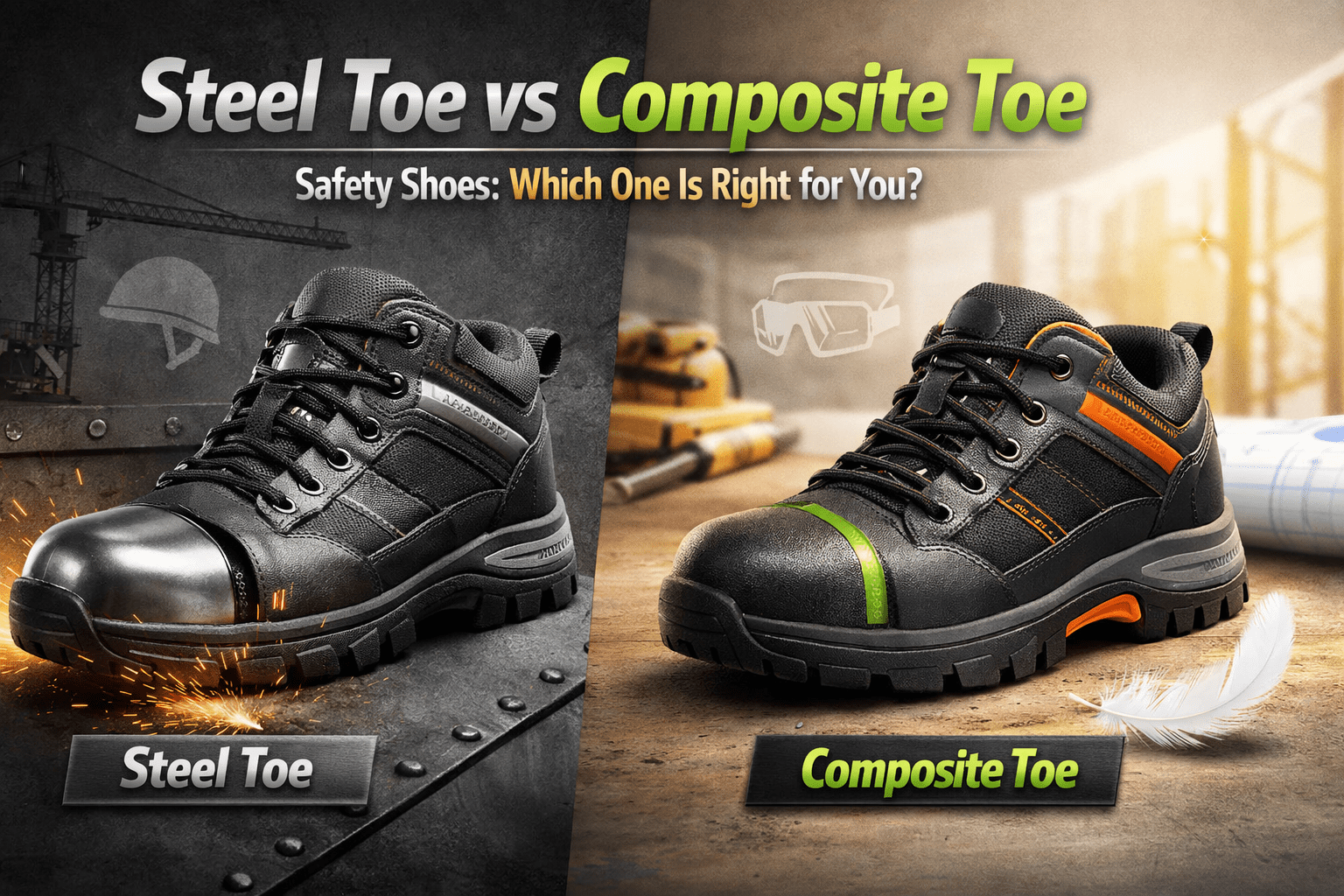
When it comes to workplace safety, your footwear is your first line of defense. Among the most debated topics in the industrial safety world is the choice between steel toe and composite toe safety shoes. Whether you work on a construction site, in a factory, or a warehouse, choosing the right safety shoe can make all the difference — not just for protection, but also for comfort, compliance, and long-term health.
In this guide, we break down everything you need to know about steel toe vs composite toe safety shoes so you can make the smartest choice for your work environment.
What Are Steel Toe Safety Shoes?
Steel toe safety shoes have a strong steel cap embedded in the toe area of the shoe. This cap protects your feet from heavy falling objects, compression, and impact injuries. In India, steel toe shoes are the most widely used type of industrial safety footwear, especially in construction, manufacturing, and heavy engineering sectors.
Steel toe shoes are tested according to the IS 15298 standard and are trusted by millions of workers across the country for daily foot protection. They are highly durable and generally more affordable than composite toe options, making them the first choice for budget-conscious buyers and large-scale industrial procurement.
What Are Composite Toe Safety Shoes?
Composite toe safety shoes replace the steel cap with non-metal materials such as carbon fiber, Kevlar, fiberglass, or high-strength plastic. These materials still provide protection against impact and compression, but with a very different set of physical properties.
Composite toe shoes are specially designed for workers who operate in environments with metal detectors, or those who work in extreme temperatures. They are significantly lighter than steel toe shoes, which helps reduce foot fatigue during long working hours and improves overall comfort throughout the shift.
Steel Toe vs Composite Toe: Head-to-Head Comparison
Protection Level
Both steel toe and composite toe safety shoes meet the same impact and compression protection standards under ISI and international certifications. However, steel toe shoes are generally considered more reliable under extremely heavy-duty impact, such as in areas involving cranes, forklifts, or very heavy machinery where the risk of large object drops is high.
Weight
This is one of the most noticeable differences between the two. Composite toe shoes are approximately 30–40% lighter than steel toe shoes. For workers who stand or walk for 8–10 hours a day, this weight difference is significant. Lighter footwear reduces fatigue, improves posture, and lowers the risk of long-term joint and back problems.
Temperature Conduction
Steel conducts both heat and cold, which means steel toe shoes can become uncomfortably hot in summer and painfully cold in winter. Composite toe shoes are temperature-neutral — they neither absorb heat nor conduct cold. For workers in outdoor environments, cold storage units, foundries, or any extreme temperature setting, composite toe shoes provide a much more comfortable experience year-round.
Metal Detector Compatibility
Workers in airports, military installations, nuclear facilities, pharmaceutical plants, or any high-security area equipped with metal detectors cannot wear steel toe shoes without triggering alarms. Composite toe shoes are 100% metal-free, making them the only practical option for these work environments.
Durability
When it comes to long-term durability, steel toe shoes have the edge. Under extreme compression or repeated heavy impact, steel bends but generally holds its shape and continues to protect. Composite materials, while strong, can crack or fracture under very severe impact loads. For high-risk heavy industry, steel toe is the more dependable long-term option.
Cost
Steel toe safety shoes are more affordable and widely available. In India, good quality steel toe shoes are available from ₹800 to ₹3,000. Composite toe shoes cost more due to the advanced materials used in manufacturing, typically ranging from ₹1,500 to ₹5,000 or more. For large bulk orders, steel toe remains the more economical choice.
Electrical Hazard Protection
Steel is a conductor of electricity, which means steel toe shoes carry a risk in environments where electrical hazards are present. Composite toe shoes are electrically non-conductive, making them a safer and smarter choice for electricians, linemen, and anyone working near live electrical equipment or high-voltage areas.
When Should You Choose Steel Toe Safety Shoes?
Steel toe safety shoes are the right choice if you work in construction, mining, or heavy manufacturing. They are also ideal if your work area carries a high risk of heavy objects falling, if you are looking for a cost-effective bulk solution, if your site does not use metal detectors, or if you prioritize maximum durability over lightweight comfort.
When Should You Choose Composite Toe Safety Shoes?
Composite toe safety shoes are the better option if you work in airports, defense sectors, or high-security zones. They are also recommended for electricians and workers in the electrical field, for anyone who stands for long hours and needs lighter footwear, for workers in extreme cold or high-heat environments, and for those who suffer from foot fatigue, joint pain, or other lower limb discomfort.
Which Is Better for Indian Workers?
For the majority of Indian workers in manufacturing, construction, and general factory environments, steel toe safety shoes remain the most practical and affordable option. They meet all standard safety requirements, are available in a wide range of brands, and offer proven durability in tough conditions.
However, workers in IT parks, airports, chemical plants, electrical departments, and high-security facilities will find composite toe shoes better suited to their specific needs. The key is to assess your work environment, hazard type, and daily comfort requirements before making a decision.
At Feetsmart.in, you will find both categories stocked with top brands including Hillson, Liberty, JCB, Ramer, and Vaultex — available for both retail and wholesale orders across India.
Both steel toe and composite toe safety shoes are excellent choices when selected for the right environment. If you need heavy-duty protection at a lower price point, go with steel toe. If you need lightweight comfort, temperature neutrality, electrical safety, or metal-free design, composite toe is the smarter investment.
Above all, always purchase safety shoes that carry ISI certification or internationally recognized safety standards. Cutting corners on footwear quality is a risk no worker or employer should take.